
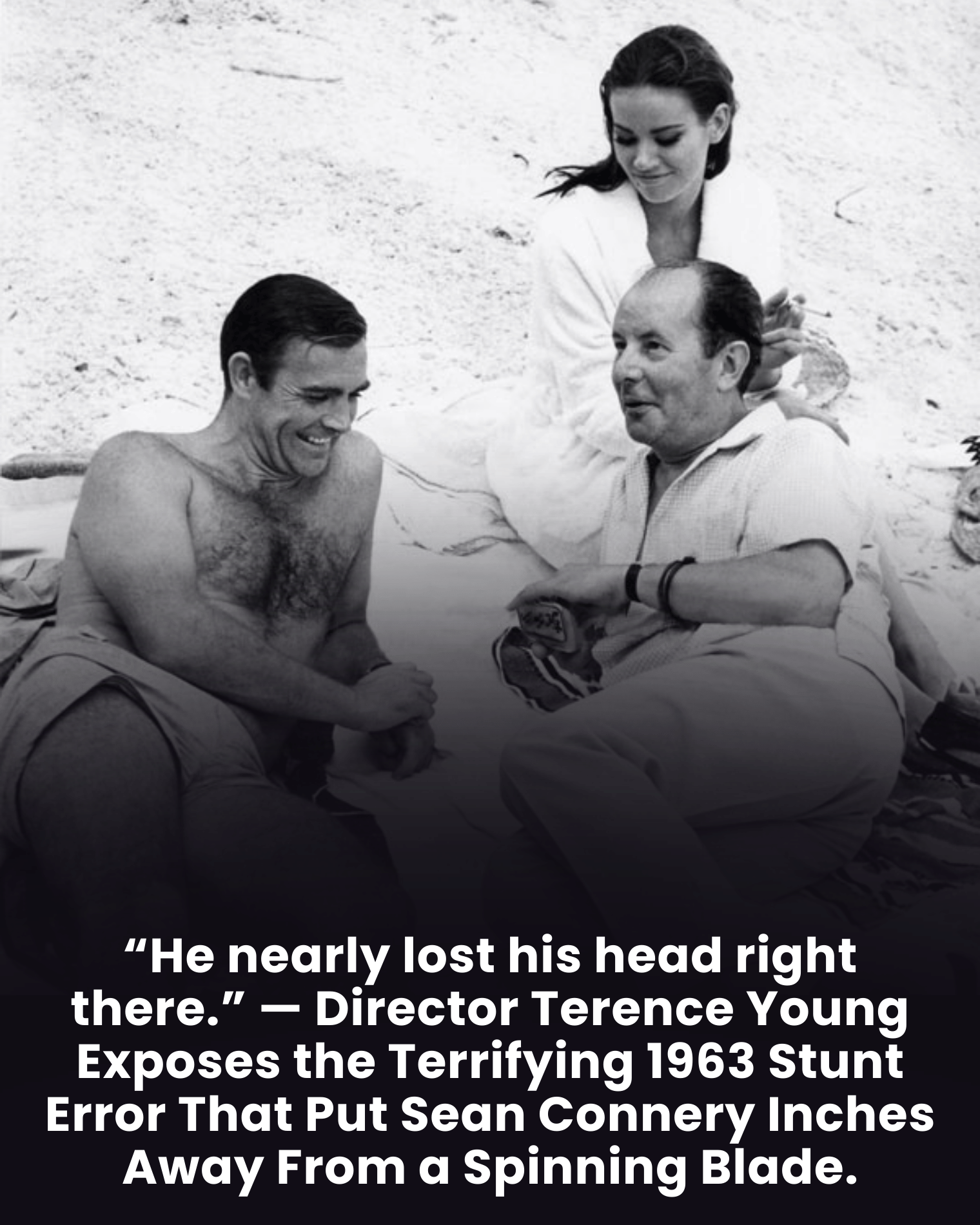
In the early 1960s, the James Bond franchise was still discovering the boundaries of cinematic spectacle. Long before digital effects or advanced stunt safety systems existed, filmmakers often relied on practical stunts that placed actors dangerously close to real hazards. One of the most alarming examples occurred during the filming of 1963's From Russia with Love, when a helicopter stunt nearly turned into a fatal accident for Sean Connery.
The sequence in question was the dramatic helicopter chase in which Bond is pursued across an open landscape by a low-flying aircraft. At the time, director Terence Young wanted the moment to feel as authentic and threatening as possible. Instead of relying on miniature models or optical tricks, the production used a real helicopter performing aggressive low passes over the actor. It was a decision that would briefly push the film set to the brink of disaster.
During one of the takes on the Scottish location, a breakdown in communication between the crew and the pilot created a terrifying situation. According to accounts later recalled by Young, the helicopter approached far lower and faster than planned. The aircraft descended toward the ground with its spinning rotor blades slicing through the air just feet above Connery, who was positioned directly in its path as part of the chase shot.
For a few seconds, the set froze in shock. Crew members watching the monitors reportedly realized the aircraft was dangerously close to the actor's head. At that moment, Connery reacted instinctively. Rather than hesitating or waiting for direction, he threw himself face-first into the dirt, flattening his body against the ground as the helicopter roared overhead. The quick movement may have saved his life, as the spinning rotor blades passed frighteningly close above him.
What makes the incident even more remarkable is how Connery handled the aftermath. After the helicopter cleared the area, he reportedly stood up, brushed dust off his suit, and calmly continued filming. Instead of shutting down the day's work, the actor returned to the set and completed the remaining hours of production. That moment reinforced the tough, unflappable persona audiences associated with James Bond—though in this case, the danger was entirely real.
The near-miss highlights the radically different safety culture of filmmaking during the 1960s. Today, strict stunt coordination, digital effects, and complex safety regulations would make such a shot almost impossible to attempt with a leading actor directly involved. Productions now employ stunt doubles, controlled rigs, and CGI enhancements to recreate danger without exposing performers to genuine risk.
Yet in the early Bond era, realism often came at a steep price. Connery's willingness to place himself in physically demanding situations helped define the gritty authenticity that made the franchise a global phenomenon. Scenes like the helicopter chase in From Russia with Love contributed to the film's reputation as one of the most grounded and suspenseful entries in the series.
Looking back decades later, the story serves as a reminder of how close cinema history sometimes comes to catastrophe. Had Connery reacted a split second slower, the Bond legacy—and perhaps the entire trajectory of action filmmaking—might have been drastically different. Instead, the actor's quick instincts and composure turned what could have been a tragedy into one of the most chilling behind-the-scenes stories in the history of the 007 franchise.