
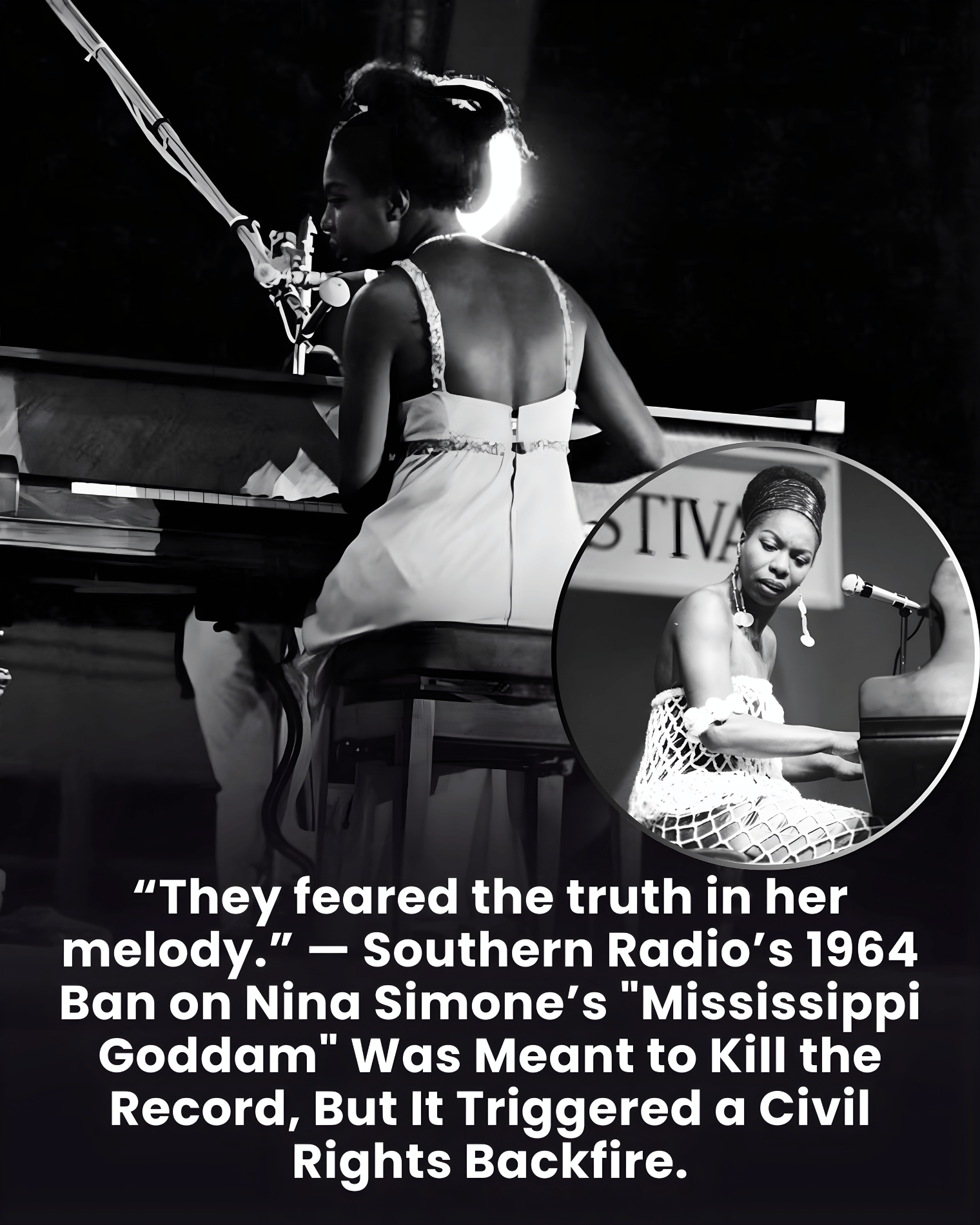
In 1964, Nina Simone released a song that would become one of the most powerful protest statements in American music history. Titled "Mississippi Goddam," the track was not simply another jazz or soul recording—it was a furious response to the violence and injustice that had shaken the United States during the height of the Civil Rights Movement.
Simone wrote the song after two devastating events that deeply affected her. Civil rights leader Medgar Evers had been assassinated in Mississippi in 1963, and only months later the 16th Street Baptist Church bombing in Birmingham, Alabama killed four young Black girls. The brutality of these events shocked the nation, but for Simone, the grief quickly turned into determination.
Rather than expressing her anger quietly, she sat at the piano and began writing what she later described as her first true protest song.
"Mississippi Goddam" was blunt, direct, and unapologetic. Unlike many political songs of the era that relied on subtle metaphor, Simone's lyrics openly condemned racism and demanded urgent change. The song blended a lively Broadway-style melody with sharp, defiant words—a contrast that made its message even more striking.
When the record reached radio stations, the reaction in the American South was immediate and intense.
Many Southern broadcasters refused to play it. Some programmers reportedly went so far as to physically break the vinyl records in half and send the shattered pieces back to Simone's record label as a symbolic rejection. For them, the song's direct criticism of segregation and racial violence was too controversial for public airwaves.
The ban was meant to silence the record.
Instead, it amplified its impact.
News of the censorship spread quickly, drawing even more attention to the song and its message. Civil rights activists began embracing "Mississippi Goddam" as a musical expression of the anger and frustration felt by many Black Americans during the struggle for equality.
Simone herself performed the song live at rallies and concerts, where audiences responded with powerful enthusiasm. The lyrics—calling out injustice and demanding action—resonated deeply with those participating in demonstrations across the country.
By 1965, the song had taken on an even greater role within the movement.
During the historic Selma to Montgomery marches, thousands of protesters gathered to demand voting rights and challenge discriminatory laws. Among the chants, speeches, and songs that filled the air, Simone's "Mississippi Goddam" emerged as a defiant anthem.
Crowds of demonstrators sang the words together, transforming the track from a controversial recording into a collective declaration of resistance. What had begun as a personal response to tragedy had evolved into a powerful symbol of protest.
For Nina Simone, the experience confirmed her belief that music could be more than entertainment. It could be a tool for truth, capable of confronting injustice and inspiring people to act.
Although many radio stations initially tried to suppress the song, its message could not be contained. Over time, "Mississippi Goddam" came to be recognized as one of the most significant protest songs of the Civil Rights era.
Today, the recording stands as a reminder of how art can challenge power—and how attempts to silence a voice can sometimes make that voice echo even louder through history.